How do you access food in your city? For many city dwellers, convenience shapes how and where we get our food. In this piece from Caring for the City, Julia Gunst — who holds an M.Sc. in Nordic Urban Planning Studies and a background in Urban Planning & Creative Engagement — reflects on everyday food habits, access, and community alternatives after attending Slow Down the Urban Food System during the Copenhagen Architecture Biennial.
Text: Julia Gunst
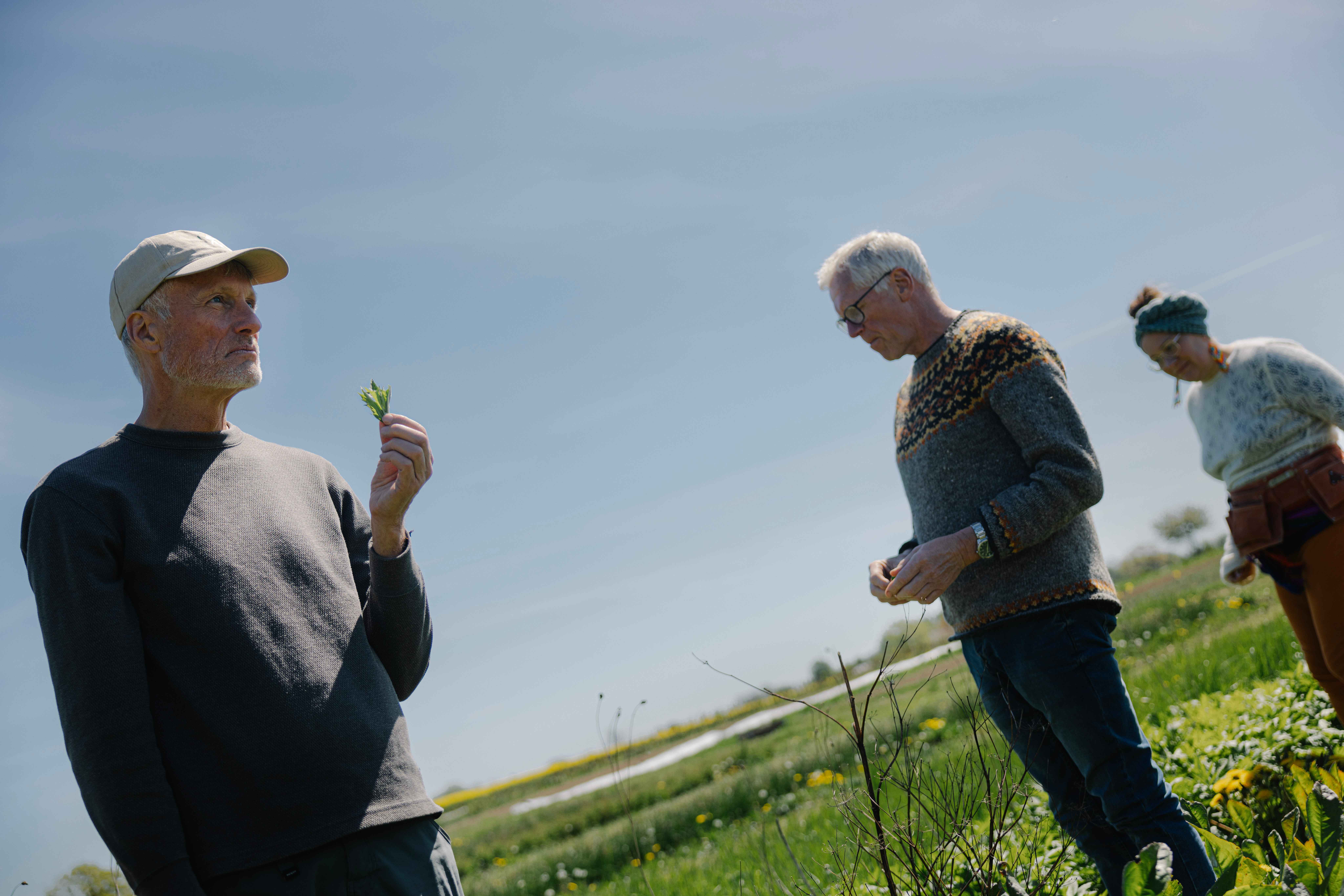
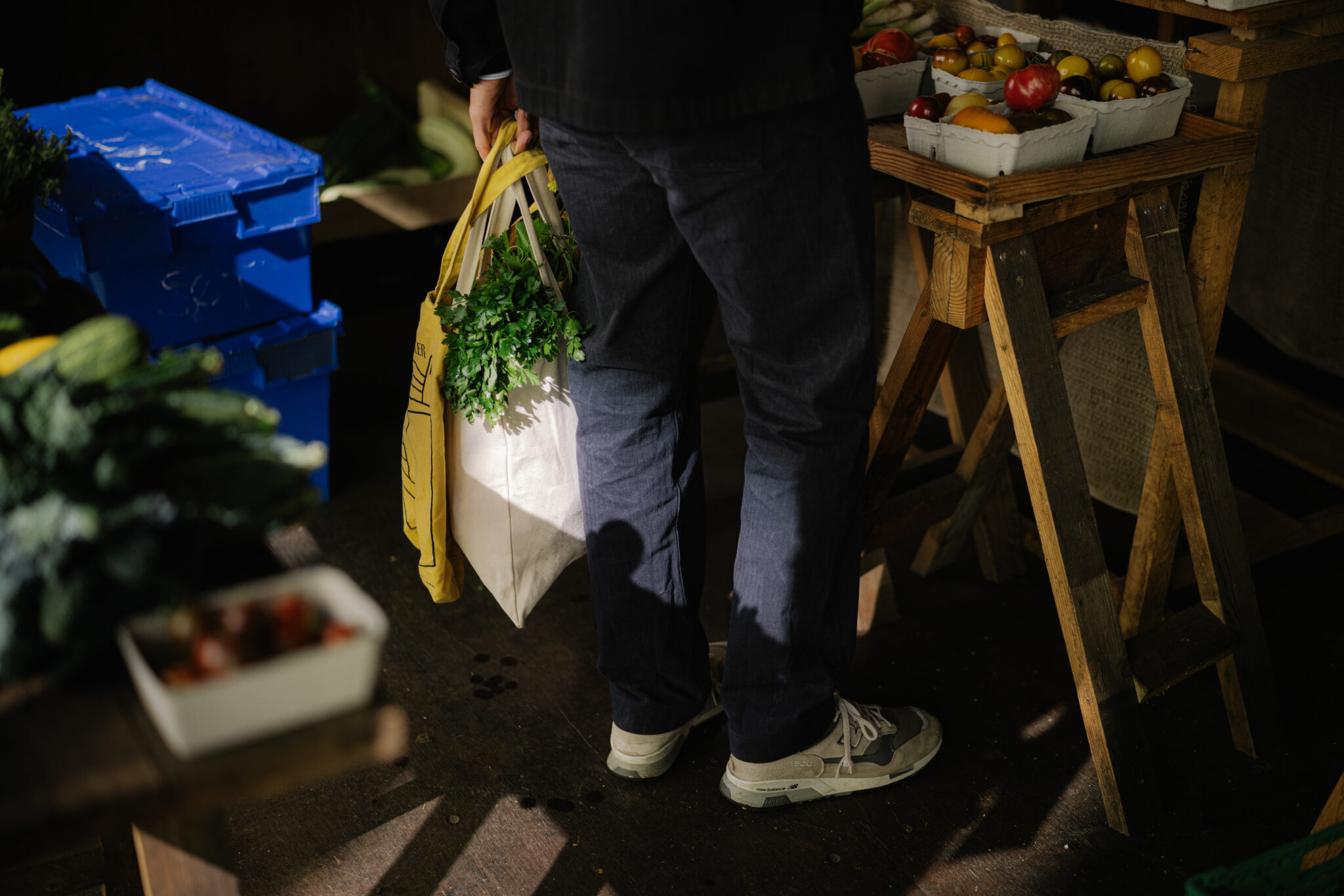
Photo: Liv Kastrup for Madland
For many living in cities, routines shape how and where we access food. We may pop by to the supermarket closest to us on the way home from work, repeating every day what’s easiest for us. In many North American cities, food deserts add a spatial challenge with long distances to grocery stores giving plentiful convenience stores and fast food an advantage.
Copenhagen is a lucky city — there is seemingly a Netto or Rema 1000 grocery store on every corner. However, these chain stores are owned by Salling Group, Denmark’s largest retailer. The use of packaging in these stores is being impacted by a new law that’s set to increase prices for consumers even further.
What alternatives exist to expensive chain stores that often use plastic packaging and are they hard to access?
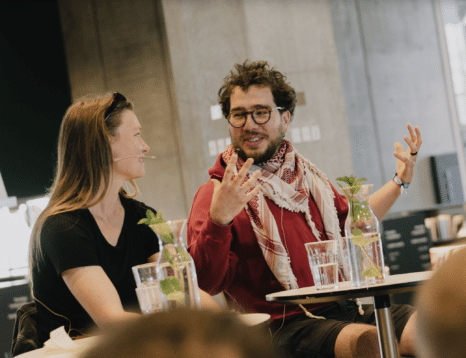
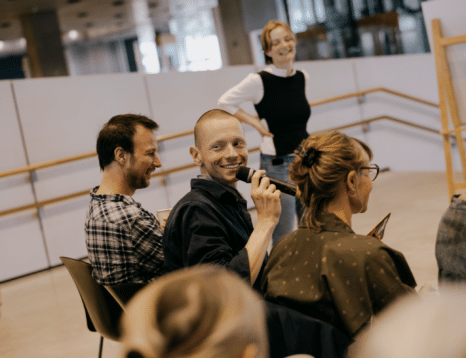
As part of the Copenhagen Architecture Biennale, I went to an event titled Slow Down the Urban Food System. Marie Sainabou Jeng, Founder and Programme Director at Madland, guided us through questioning beliefs and food habits in conversation with Tina Saaby, architect and CEO at the Danish Town Planning Institute and Christian Pagh, Senior Project Lead of Urban Commons at Mellemfolkeligt Samvirke. There is a diversity of actors and projects working towards more sustainable and just food futures, from farm-to-table collective dinners to urban commons mapping.
Community initiatives and everyday change
One important point that was discussed during the event was that rethinking how we get food and what we eat has societal level benefits from reduced health care spending to fighting climate change. On the level of urban planning, zoning and regulations are one area that can be looked at, but these factors primarily impact how larger grocery stores are built and where.
The discussion turned towards the big impacts of community-level initiatives, as well as integrating urban farming into residential areas. Mixing of activities and spaces, such as making space for sustainable food actors to create a project in schools for example, was discussed as one way forward. Why not be able to pick up a box of produce from your child’s school?
Where I live currently in Brønshøj, it has been possible to pick up a box of fresh produce weekly from a house down the street. The house has chickens and the produce is available to pick from and self-assemble your box. The area is suburban, but it is still refreshing to see the rural creeping in.
The concept of a weekly box of produce is not new to me, as I was signed up for one in Calgary from YYC Growers and Distributors, which unfortunately appears to be closed. I went around the corner every week to a nearby church to pick up the produce — how much easier could it get?
The concept of working sustainable food options into everyday routines reminds me of the urban planning concept of desire lines. We will go in a city through paths that are most convenient to us, even if the city is structured to direct us in other directions, so why not go where the people are?
Mindset, memory and resilience
Mindset is one part of our food system that urban planning cannot easily adjust. Marie Sainabou Jeng spoke of her grandmother, who was shaped by the difficulties of WWII and often reminded her that you never know where your next meal will come from.
This reminds me of my grandparents as well, as my father was often told they had to finish their entire plate before leaving the table. The abundance, experienced by some but not all, of our current times is not guaranteed and we risk losing our ability to be self-sufficient. During the pandemic, it seems some of us revived those skills and interests, notably through the sourdough craze, if not just to help pass the time. One of the things that appeared to make these old fashioned activities popular again was the social aspect of sharing our creations with each other.
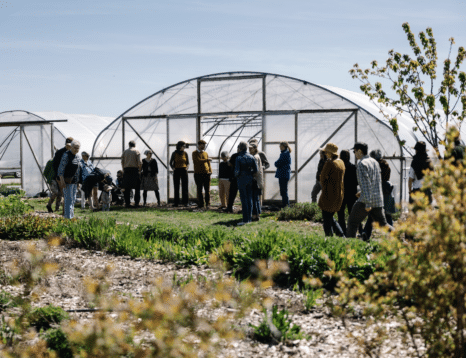
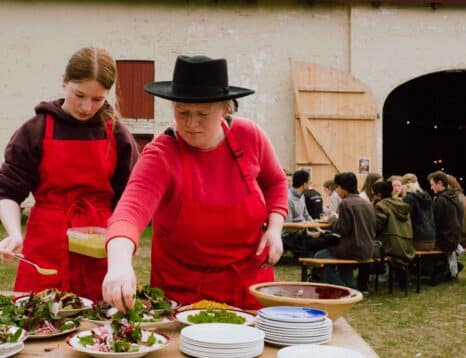
In Denmark, the social aspect of food is often highlighted as important and fællesspisning, or community dining, has become a popular way to share the joy of food across long tables. Learning gardening skills and enjoying the fruits of our labour doesn’t have to be done alone. Østergro is a rooftop farm in Copenhagen that also offer drop in volunteering every Tuesday. Livia, one of the founders of Østergro, was present at the event to show us a variety of produce grown there.
Relearning connection through food
The option to drop in and learn about gardening in any city, as well as enjoy the food produced, is invaluable. In Norway, I learned the concept of dugnad, which is the concept of getting together to help out your community. Many Norwegian community gardens offer drop in times to help out, pitch in, take some produce with you, and enjoy a good coffee afterwards. I was struck by the casualness — no training was needed and anyone can join.
If we are to invest in our cities in a sustainable and social way, perhaps it’s time to redirect our funds and energy away from large corporations and towards small-scale actors. This article is just a starting point for reflection, as discussions around urban food systems extend far beyond the topics touched on here.
Check out Madland’s new guide for Copenhagen with many producers and shops to support. It may just be easier than you think.